
The Short Answer: The right chair material depends on where the chair will be used and how much wear it needs to handle. High-traffic environments call for durable materials like vinyl or polyurethane, while lower-demand spaces can work well with fabric, synthetics, or breathable mesh. Getting this decision right upfront saves money and frustration down the road.
Chair upholstery affects more than how a seat looks. The material you choose determines everything from how long a chair lasts, how easy it is to clean after a spill, how comfortable it stays over time, and whether it can handle the conditions of the space it lives in. This guide breaks down common materials so you can make the right call for you, your space, and your budget.
Why Chair Material Matters More Than You Think
A chair might look great on day one, but the wrong upholstery will show wear fast. Stains set in. Seams split. Foam underneath compresses unevenly. The material you sit on daily takes a real beating, and not all materials are built to handle it.
The factors that matter most when evaluating chair material:
- Durability: How long will it hold up under regular use?
- Cleanability: Can you wipe it down quickly, or does a spill become a permanent stain?
- Comfort: Does it breathe? Does it stay comfortable across long periods of sitting?
- Appearance: Does it fit the décor and the function of the space?
- Maintenance: What does ongoing care actually look like?
The right answer shifts depending on the type of chair, the environment, and who is using it.
The Most Common Chair Materials Compared
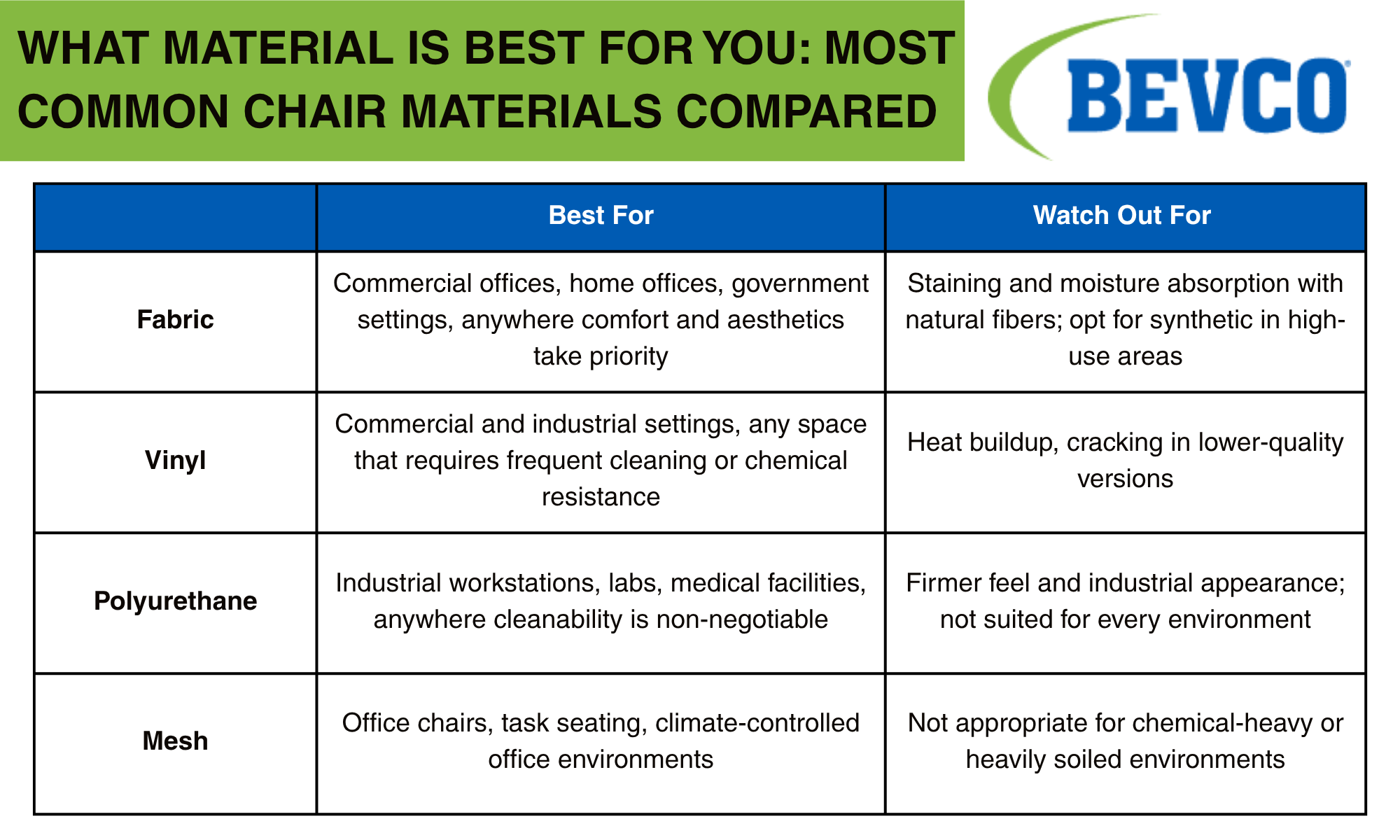
Fabric
Fabric is one of the most widely used chair materials. It comes in a wide range of types and finishes, offers a comfortable feel over long sitting periods, and works across a variety of environments and design aesthetics. For commercial use, synthetic fabrics are the stronger choice. Polyester, nylon, acrylic, and olefin are engineered for durability and fade resistance, and they hold up to daily wear far better than natural fibers like cotton. When the priority is a chair that is comfortable, visually versatile, and built to last in a professional setting, fabric delivers on all three.
Bevco’s fabric is rated to 250,000 double rubs via Wyzenbeek, with Class 5 lightfastness and Class 4.5/5 colorfastness wet and dry. It passes CAL TB 117, NFPA 260, and UFAC Class 1 for flammability and carries a WS cleaning code, meaning both water-based and solvent-based cleaners are safe to use. Those specs put Bevco well above standard commercial thresholds and make our material one you can count on for the long haul.
Vinyl
Vinyl is one of the most practical upholstery options available for commercial and industrial environments. Made from PVC, it is naturally waterproof, resistant to scratches and stains, and designed to wipe clean quickly after spills. It holds up well in high-traffic spaces, works across a wide range of settings, and costs less than genuine leather while offering comparable durability. For environments where chairs take a beating and need to stay clean with minimal effort, vinyl is hard to beat.
Bevco’s vinyl is rated to 50,000 double rubs via Wyzenbeek, bleach cleanable at a 1:9 solution, and resistant to bacteria and mildew. It cold crack tests to -10°F and passes CAL TB 117, NFPA 260, and UFAC Class 1 for flammability. That combination of chemical resistance, cleanability, and durability makes it a reliable choice for demanding environments where other materials fall short.
Polyurethane
Polyurethane seating is built for environments where cleanability, durability, and chemical resistance matter more than cushioning or aesthetics. In industrial, medical, laboratory, and government settings, standard fabric and vinyl won’t cut it. Heavy-duty polyurethane fills that gap. Unlike the soft PU used in some upholstered furniture, heavy-duty polyurethane is a dense, solid elastomer molded into a single seamless shape. This means no fabric, stitching, or crevices where bacteria and debris can collect.
It resists oils, solvents, punctures, and abrasions without peeling, flaking, or absorbing spills the way traditional upholstery can. It wipes clean in seconds and stands up to industrial cleaning agents that would damage fabric or vinyl. The trade-offs are comfort and appearance. Polyurethane is firm and industrial-looking, which is not the right fit for every space. But for cleanrooms, food processing facilities, labs, and factory floors where hygiene is non-negotiable, it is the material that delivers.
Mesh
Mesh is not a traditional upholstery material, but it has earned a place in this comparison given how widely it is used in office and task seating. The open weave promotes airflow and reduces heat buildup during long sitting periods while not trapping debris the way fabric does. It also holds its shape well over time. For task seating, mesh pairs naturally with ergonomic features like lumbar support and seat height adjustment. OSHA’s computer workstation guidelines note that proper seat support and adjustability directly reduce fatigue and musculoskeletal discomfort, and mesh chairs are well-suited to meet those needs.
Mesh is not a good fit for spaces that require frequent wiping with cleaning agents, as it does not offer the chemical or moisture resistance that vinyl and polyurethane provide. For office and government environments where comfort and airflow take priority, it is a strong choice. For industrial, lab, or healthcare settings, it is not the right call.
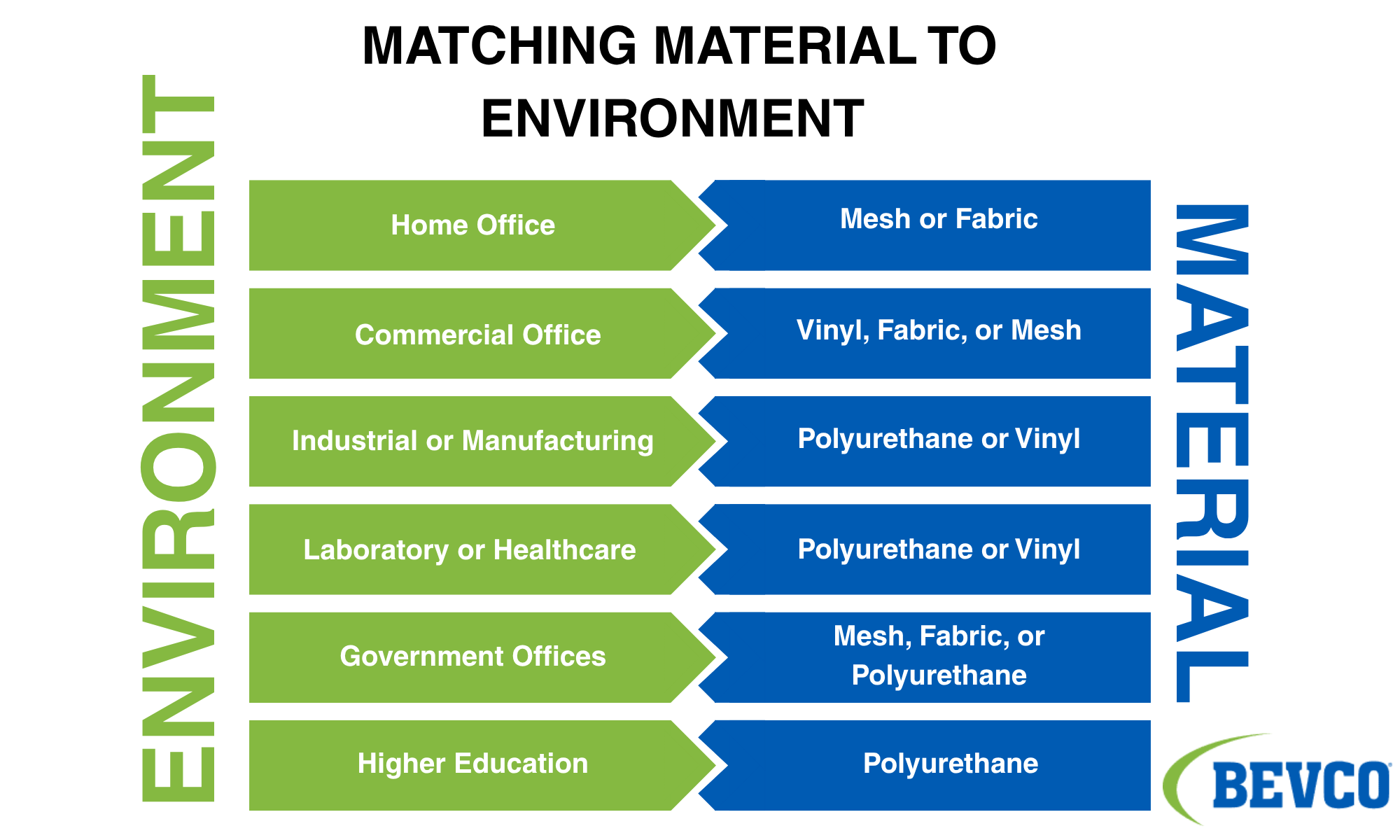
Matching Material to Environment
Keeping Any Chair Material Clean

Regardless of material, acting fast is the most effective step in stain removal. A few general rules:
- Blot spills immediately rather than rubbing them in
- Use a damp cloth for vinyl, and polyurethane
- Follow manufacturer care instructions (link to Bevco’s care instructions)
- Avoid harsh chemicals on materials not rated for them
Choosing Seating Built for Your Environment
For residential furniture decisions, the right chair material often comes down to personal preference, budget, and décor, but for commercial and industrial environments, the stakes are higher. The wrong material means more frequent replacements, harder cleaning, and chairs that fail under real-world conditions.
BEVCO designs and manufactures seating built for exactly those high-demand environments. Available in polyurethane, vinyl, and fabric upholstery options, every chair is made to order and engineered to hold up to daily use in manufacturing, laboratory, healthcare, and government settings. If you are not sure which material fits your needs the best, our Chair Configurator is a good place to start, or you can find a distributor near you to talk through your options directly.