
The Short Answer: There is no single number for an office chair’s lifespan. A cheap task chair may wear out in a year or two, while a well-built, high quality commercial or industrial chair that gets proper care can perform for over a decade. The average lifespan depends on how the chair is built, the environment it works in, the hours of daily use it sees, and whether it gets regular maintenance.
A chair used for a few hours in a home office lives a very different life than an ergonomic chair running two shifts on a production floor. Age is not the best way to judge a chair. What matters is how well it is doing its job today. In manufacturing, laboratory, education, healthcare, and other demanding settings, the right chair supports comfort, productivity, and safety through long hours on the job. Here are five signs it is time to replace yours, and how to get the most life from the one you have.
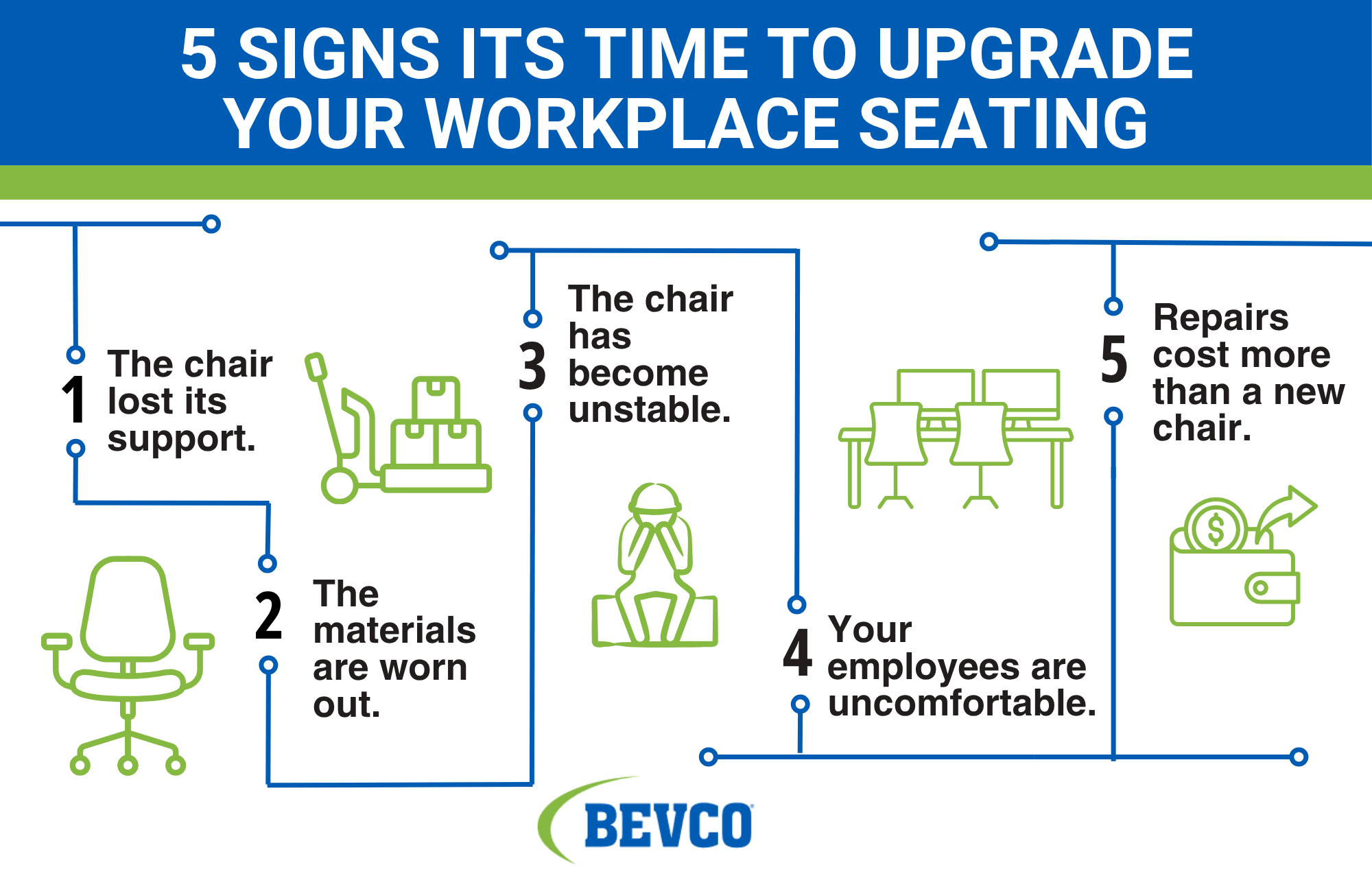
1. The Chair Stops Holding Its Support
Support is the first thing to go, and it fades before you see it. Cushioning packs down, mechanisms loosen, and the chair stops supporting proper posture. Because it is gradual, people naturally adapt to it without noticing.
Signs to watch for:
- Lower-back or leg discomfort that builds over a shift
- Constant shifting, leaning, or perching on the seat edge
- A seat cushion that feels flat or uneven
- A backrest or lumbar support that will not hold its setting
- A seat that slowly sinks and will not stay at height
These are not just comfort problems. Every time someone repositions to make up for weak support, attention is pulled off the task and productivity is lost.
2. The Materials Are Wearing Out
Hard-use environments are tough on seating. Chairs on shop floors, in labs, and in classrooms take constant movement, cleaning, chemicals, and moisture, and eventually the surfaces and cushioning give out.
Signs to watch for:
- Cracks, splits, or tears in the seat or back
- Punctures or heavy surface wear
- Polyurethane that has broken down or gone rough
- High-density foam that stays compressed instead of bouncing back
- Loose or damaged parts, especially around mounting points
Some cosmetic wear is normal. What matters is whether it has started to affect comfort, cleanability, or safety. A cracked seat in a lab or a torn surface in a healthcare space is a performance problem, not a looks problem.
3. The Chair Has Become Unstable
A chair should provide a stable, dependable foundation for the person using it. When it begins to rock, wobble, sink, or roll unexpectedly, it’s often a sign that a component has worn, loosened, or failed—and it’s time to identify the cause before a minor issue becomes a larger problem.
Signs to watch for:
- Rocking or wobbling from side to side
- A base that is cracked or visibly stressed
- Casters that do not roll easily, or will not hold still when they should
- A gas lift that will not hold seat height
- Cracked or flexing structural parts
Some of it comes down to a single worn part. An individual caster or a gas lift can often be swapped out, and a chair with replaceable components is worth repairing before writing it off as a lost cause. However, when several parts fail at once, or the frame or base is in question, replacing the chair could be the best option.
4. Employees Are More Tired or Uncomfortable Than They Should Be
Sometimes the clearest sign is not on the chair at all. It is in the person sitting in it. Employee feedback is worth watching for.
Look for people who are:
- Complaining about back pain or persistent discomfort
- Standing up more often than the task requires
- Shifting constantly to find a comfortable position
- Bringing in their own cushions or makeshift supports
- Running out of energy before the end of a shift
When a chair stops holding proper posture, the person has to steady themselves over multiple hours, and that strain and the pressure points that come with it add up to fatigue and soreness. Even a chair that still works can be what is tiring people out. What matters is not whether it functions, but whether it is still doing enough to benefit the person using it.
5. You’re Spending More to Keep It Going
Repairing a worn-out chair feels like the cheaper choice, but not always. One worn caster, cylinder, or arm is an easy fix and can extend its lifetime significantly. But as repairs stack up, the math shifts.
Repairs are not the only cost of keeping an aging chair in service:
- Replacement parts
- Maintenance labor and service calls
- Downtime while the chair is out
- Possible safety concerns
A chair that needs the occasional part can still be a great value, but one that needs attention over and over is telling you something. This is where the total cost of ownership matters more than the sticker price.
How to Get the Most Life Out of Your Bevco Chair
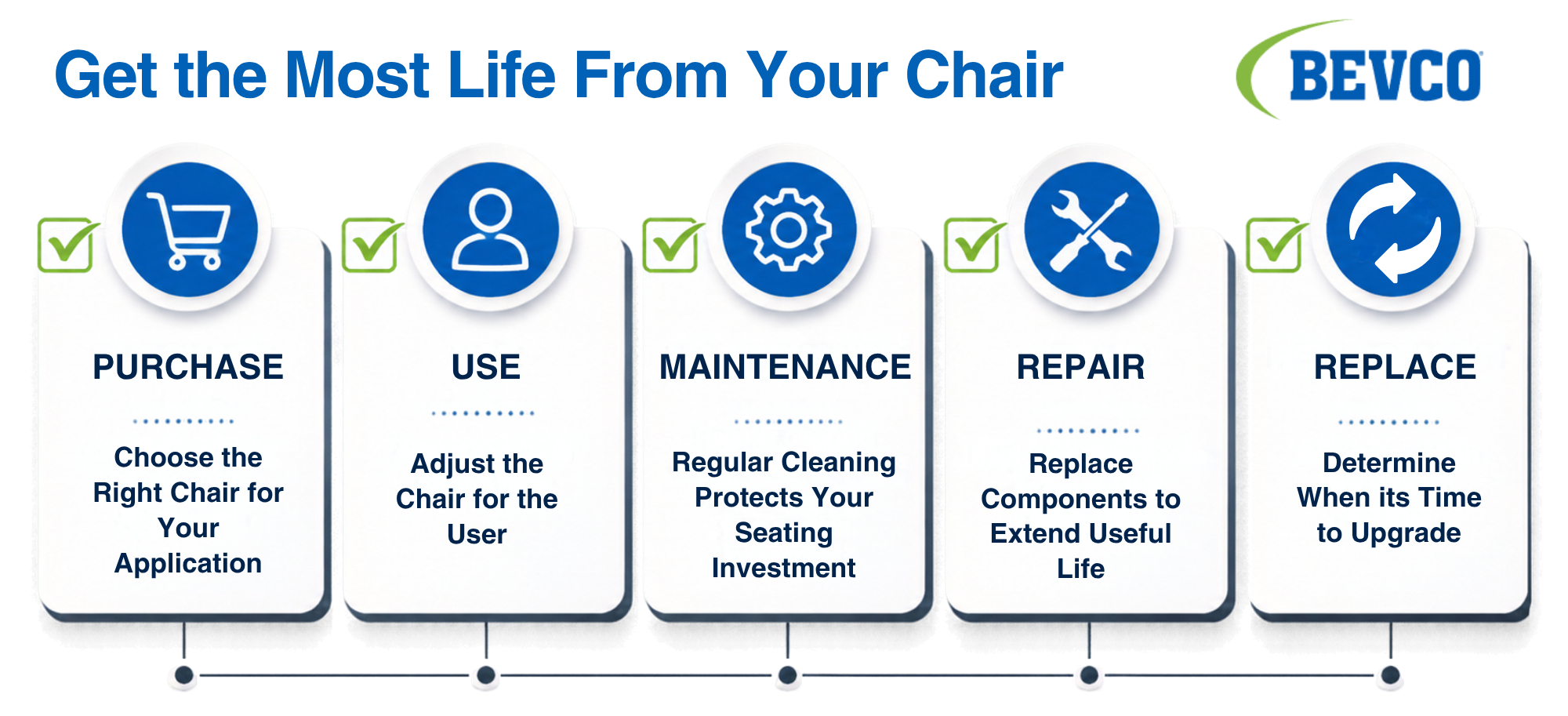
A quality ergonomic chair is an investment. And like any investment, proper care and maintenance can help you get more value from it over time.
In demanding environments, from manufacturing floors and laboratories to healthcare, education, and office workstations, chairs can experience thousands of hours of use. Daily movement, repeated adjustments, cleaning, spills, chemicals, and general wear can all take a toll.
The good news? A little preventive care can go a long way toward extending the useful life of your Bevco chair.
Whether your chair is brand new or has been supporting your workplace for years, these simple practices can help keep it comfortable, functional, and ready for the workday.
Purchase: Choose the Right Chair for Your Application
Selecting seating designed for the application can help prevent premature wear and ensure that the chair’s materials and components are appropriate for the environment. The right chair from the beginning is the first step toward a longer service life.
Use: Adjust the Chair for the User
An ergonomic chair works best when it is properly adjusted. Seat height, seat depth, back support, arm positioning, and other available adjustments should be set according to the individual user’s needs and the workstation.
Consider training employees on proper chair use. Employees should understand basic chair adjustments, cleaning procedures, and appropriate use.
Maintenance: Regular Cleaning
Dirt, oils, dust, moisture, and other contaminants can accumulate on seating surfaces and components over time. In certain environments, exposure to chemicals or cleaning agents can also affect materials if the wrong products are used. Establish a routine cleaning schedule appropriate for your environment and the chair’s materials.
Repair: Replace Components to Extend the Useful Life
One of the advantages of a well-designed chair is that not every worn component means the entire chair needs to be replaced. Depending on the chair and the problem, individual components may be replaceable, such as casters, cylinders, armrests, and other replaceable
Replace: Determine When it’s Time to Upgrade
Proper maintenance can extend the life of a BEVCO chair, but no chair lasts forever.
Eventually, the cost of continued repairs, material deterioration, or declining performance can outweigh the benefits of keeping an aging chair in service.
Consider replacement when:
- The chair is no longer providing adequate ergonomic support.
- Multiple components are failing.
- The chair can no longer be properly adjusted.
- Materials have deteriorated significantly.
- The chair is no longer appropriate for the application.
- Repair costs and downtime are becoming excessive.
- The chair is creating a safety concern.
Maintenance should extend useful life, not postpone the inevitable.
Find the Right Chair for Your Space
When a chair reaches the end of its run, use the replacement as a chance to reexamine the whole workstation. The work, the people, and the environment may have shifted, and the furniture that fit five years ago may not fit today.
Bevco builds seating made to order in the USA, matched to the environment it is headed into, from rugged polyurethane chairs for industrial and lab floors to ergonomic seating for offices and healthcare. Every chair pairs a proven ergonomic design with replaceable components and a strong warranty.
Start with the Chair Configurator to build the exact chair you need, connect with an authorized Bevco distributor to place your order, or try one first through the sample program, a full 30 days with the chair, and you only pay if you keep it.
Frequently Asked Questions
How long should an office chair last?
The average lifespan of an office chair varies widely. A low-cost task chair may last a year or two, while a high quality commercial chair that is maintained and matched to its environment can perform for many years. How it is built, its hours of daily use, and its care matter more than age.
Is it cheaper to repair a chair or replace it?
It depends on how much is wrong. One worn part on a solid chair is usually worth repairing, especially when parts are replaceable. When repairs become frequent, or the frame and base are failing, the total cost of keeping it going often passes the cost of a new chair.
How can I make my office chair last longer?
Inspect it regularly, keep the seat height, tilt, and other adjustable features working, use regular cleaning with a damp cloth and a product made for its material, and keep it out of direct sunlight. Most importantly, match the chair to the environment it works in.
Can I try a Bevco chair before I replace what I have?
Yes. Bevco’s sample program lets you use a chair in your own space for a full 30 days. If it is the right fit, you keep it and pay the invoice. If not, you send it back.